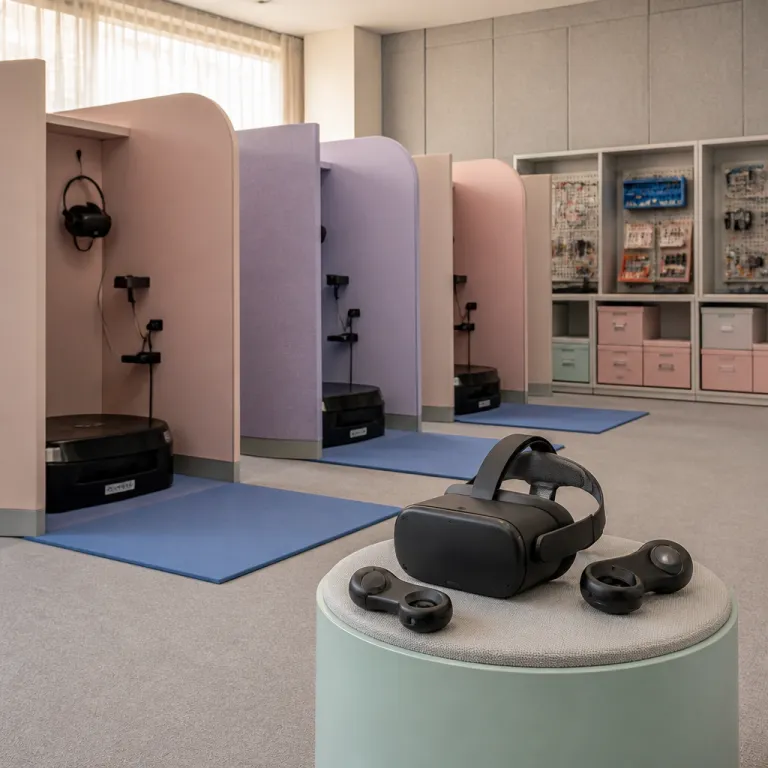
The maturation of VR immersive training in workforce reskilling
VR immersive training for workforce reskilling has shifted from experimental pilot to mainstream learning capability. Within a short strategic cycle, virtual reality moved from isolated demo experiences to being embedded in standard learning management systems and core workforce development roadmaps. For organizational development consultants, the question is now how immersive training reshapes employee training portfolios rather than whether the technology works at all.
This maturation reflects a broader convergence of technology, content, and learning development governance. Vendors now provide libraries of virtual scenarios aligned with specific job roles, while companies integrate immersive learning data into existing HR analytics and performance dashboards in real time. As a result, immersive training is no longer a novelty for a few learners but a scalable workforce training asset that supports both technical skills and soft skills across multiple industries.
Traditional methods of classroom learning and slide based training programs still matter, yet they now sit alongside extended reality solutions that simulate real life conditions. In high stakes environments, people learn complex skills training faster when employees practice repeatedly in safe but realistic virtual settings. This blended model of virtual and physical experience is redefining how employees, teams, and the wider workforce think about development, capability building, and career mobility.
Where immersive reskilling delivers the clearest ROI
Immersive learning delivers the strongest ROI where the gap between classroom learning and real life performance is widest. These contexts include dangerous environments, expensive equipment, tightly regulated industries, and geographically dispersed workforces that cannot easily gather for traditional employee training. In such cases, VR immersive training for workforce reskilling becomes a cost effective way to let employees practice repeatedly without risking safety, damaging assets, or disrupting operations.
In manufacturing, for example, virtual reality scenarios can simulate equipment failures, lockout tagout procedures, and complex maintenance tasks that would be too risky or costly to stage physically. Employees and learners rehearse these skills in real time, building both technical skills and soft skills such as communication and situational awareness under pressure. Compared with traditional methods, companies report fewer incidents, shorter downtime, and better workforce development outcomes when immersive training is integrated into structured training programs and workforce training plans.
For distributed teams, extended reality and augmented reality experiences reduce travel cost while maintaining high quality learning. A single virtual demo can be delivered to thousands of learners across regions, with consistent content and standardized assessment of skills training outcomes. Analysts tracking how AR and VR enterprise news is reshaping workforce training note that immersive technology helps people learn faster, but only when scenarios are tightly aligned with real job roles and measurable business KPIs. AR and VR enterprise reskilling insights provide useful benchmarks for these investment decisions.
The AI personalization layer in VR and AR learning
The real inflection point for VR immersive training in workforce reskilling comes from AI driven personalization. Instead of static simulations, immersive learning environments now adapt difficulty, pacing, and feedback to each learner’s performance in real time. This transforms virtual reality from a one size fits all demo into a dynamic learning development engine that continuously tunes itself to how people learn best.
In practice, AI algorithms track micro behaviors such as gaze, reaction time, error patterns, and decision paths during immersive training sessions. The system then adjusts content, branching scenarios, and coaching prompts so that employees practice exactly at the edge of their current skills, which is where learning is most efficient. Over multiple sessions, this data rich reality allows companies to map workforce skills at scale, identify capability gaps by job roles, and prioritize workforce development investments with far greater precision than traditional methods.
When combined with augmented reality overlays on real equipment or real life workspaces, extended reality ecosystems can guide employees in the flow of work, not just in simulated labs. This hybrid of virtual and physical experience means that training programs no longer end when classroom learning stops, because real time guidance continues on the job. For a deeper view of how AR scenarios are transforming the reskilling journey and reshaping immersive learning strategies, see this analysis of AR driven reskilling scenarios and their impact on time to competence.
Healthcare and manufacturing: high stakes use cases for immersive reskilling
Healthcare illustrates why VR immersive training for workforce reskilling has become strategically important. Surgical teams use virtual reality simulations to rehearse complex procedures, practice rare complications, and refine soft skills such as communication with patients and colleagues under stress. These immersive learning experiences allow learners and experienced employees to make mistakes in a safe reality, then apply refined skills in real life operating rooms with greater confidence and precision.
Beyond surgery, immersive training supports patient interaction training, triage decisions, and clinical decision making in emergency scenarios. Nurses and allied health professionals engage in skills training that blends technical protocols with empathy, listening, and de escalation soft skills, all within realistic virtual environments. Compared with classroom learning alone, this combination of virtual and real practice shortens time to competence, reduces error rates, and supports more consistent workforce development across hospitals and clinics.
Manufacturing offers a parallel story, where extended reality and augmented reality help employees practice equipment operation, safety protocols, and maintenance procedures without halting production lines. Learners move through virtual replicas of plants, experiencing near real time feedback on their actions, while training programs capture detailed performance data for learning development analytics. Over time, companies see better safety records, lower training cost per employee, and a workforce whose skills align more tightly with evolving job roles and new production technologies.
Cost benefit frameworks and hybrid models for faster time-to-competence
For senior HR and learning leaders, the core question is when VR immersive training for workforce reskilling beats traditional methods on both cost and impact. A practical framework compares the cost of design, hardware, and content development against measurable outcomes such as reduced incidents, shorter ramp up time, and higher quality in real life performance. Immersive learning tends to be most cost effective when training is repeated frequently, involves high risk tasks, or serves large numbers of learners across multiple sites.
Hybrid models often deliver the best balance, combining virtual reality simulations with on the job coaching and structured employee training pathways. In this approach, employees practice foundational skills in immersive training environments, then apply them under supervision in real settings, with feedback loops captured in learning development systems. Over time, workforce training shifts from counting training hours to tracking time to competence, error reduction, and productivity gains as the primary KPIs for workforce development.
Digital process redesign can amplify these gains, especially when immersive learning is integrated with AI powered workflows and knowledge management. For example, a digital mailroom that routes documents intelligently can free capacity for employees to focus on higher value skills training and reskilling activities aligned with new job roles. Detailed analysis of how a digital mailroom transforms work for reskilling and AI powered learning shows how technology, process, and training must evolve together to unlock full ROI. In the end, the metric that matters most is not training hours logged, but time to competence achieved across the entire workforce.
FAQ
How does VR immersive training improve workforce reskilling outcomes compared with classroom learning?
VR immersive training improves workforce reskilling by placing learners inside realistic scenarios where they can apply skills repeatedly without real life risk. Unlike classroom learning, which often focuses on theory, immersive learning emphasizes practice, feedback, and decision making in environments that mirror actual job roles. This combination typically reduces time to competence and increases retention of both technical skills and soft skills.
When is immersive training more cost effective than traditional methods?
Immersive training becomes more cost effective when the same training content must be delivered many times, across large or dispersed workforces, or when real world practice would be dangerous or expensive. In such cases, the upfront cost of virtual reality development is offset by lower travel expenses, fewer incidents, and reduced downtime on equipment. Organizations should compare total cost of ownership with measurable performance gains to decide where immersive learning fits best.
What types of skills are best suited to VR and AR based reskilling?
VR and AR based reskilling work best for procedural, spatial, and high stakes skills that benefit from repeated practice in realistic environments. Examples include equipment operation, safety protocols, emergency response, surgical procedures, and complex customer interactions that require strong soft skills. These technologies also support cross functional workforce development by allowing employees to explore new job roles and tasks before transitioning in real life.
How does AI personalization enhance immersive learning experiences?
AI personalization enhances immersive learning by adapting difficulty, pacing, and feedback to each learner’s performance in real time. Systems analyze behavior such as errors, reaction times, and choices, then adjust scenarios so employees practice at the right challenge level. This targeted approach accelerates learning, improves engagement, and provides richer data for learning development and workforce training analytics.
How should organizations integrate VR immersive training into existing training programs?
Organizations should integrate VR immersive training as part of a broader blended learning strategy rather than as a standalone novelty. A common approach is to use virtual reality for initial skills training and scenario practice, followed by on the job coaching and assessment in real environments. Aligning immersive training with competency frameworks, job roles, and business KPIs ensures that investments in extended reality and augmented reality directly support workforce development priorities.